
©Ville d'Ettelbruck

Patton Monument Ettelbruck

Where? 102, Avenue J.-F. Kennedy, L-9147 Erpeldange-sur-Sûre

Discover the Patton Memorial in Ettelbruck, an important place of remembrance. This monument honours General George Patton Jr, whose 3rd US Army liberated Ettelbruck in December 1944, stopping the invasion of the Wehrmacht during the Battle of the Bulge.

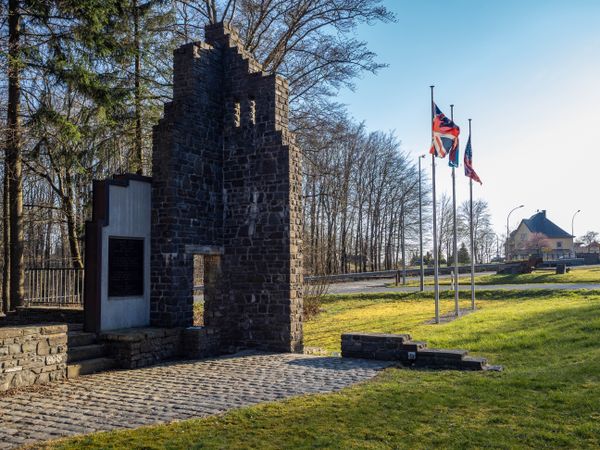
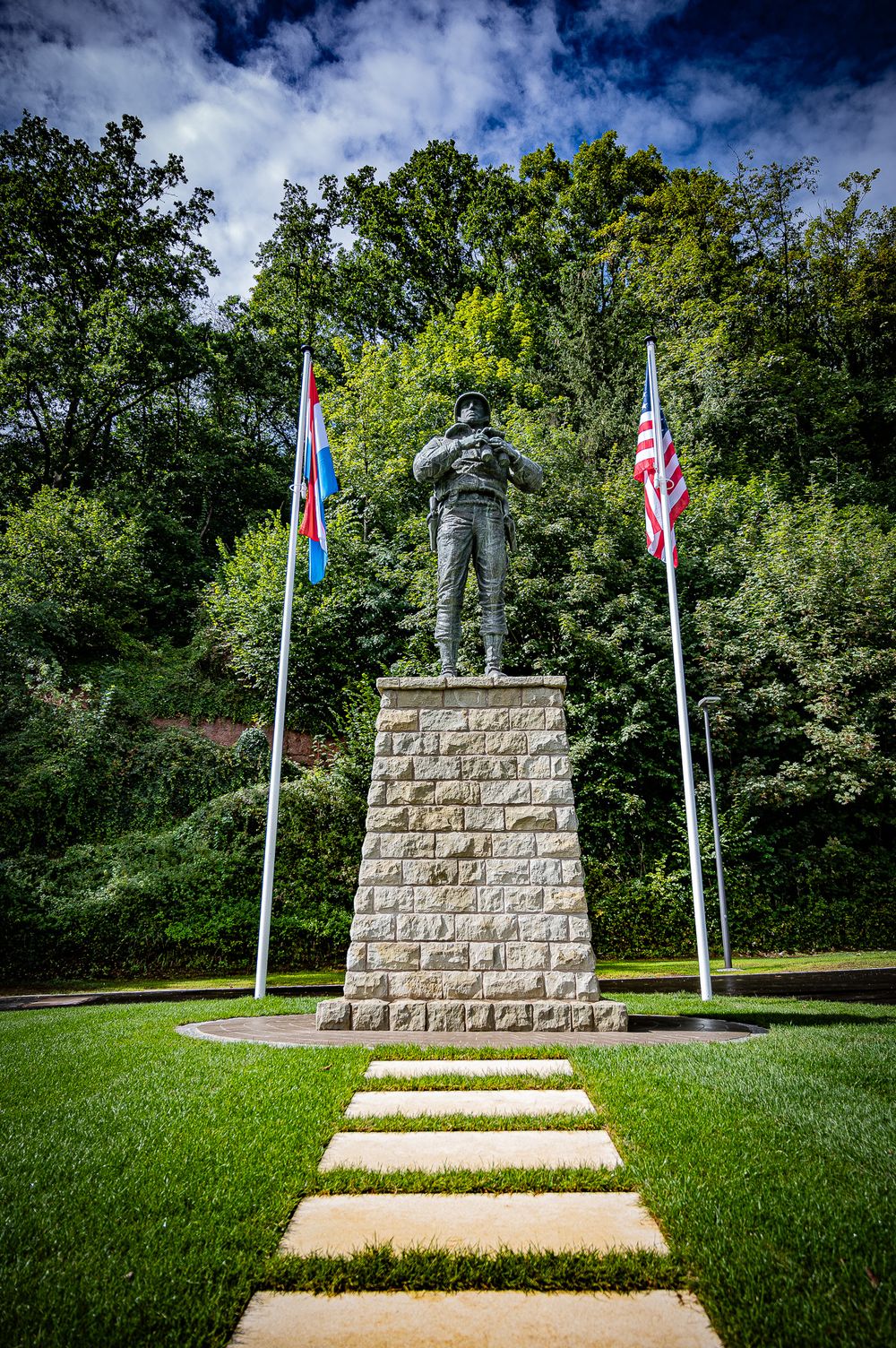
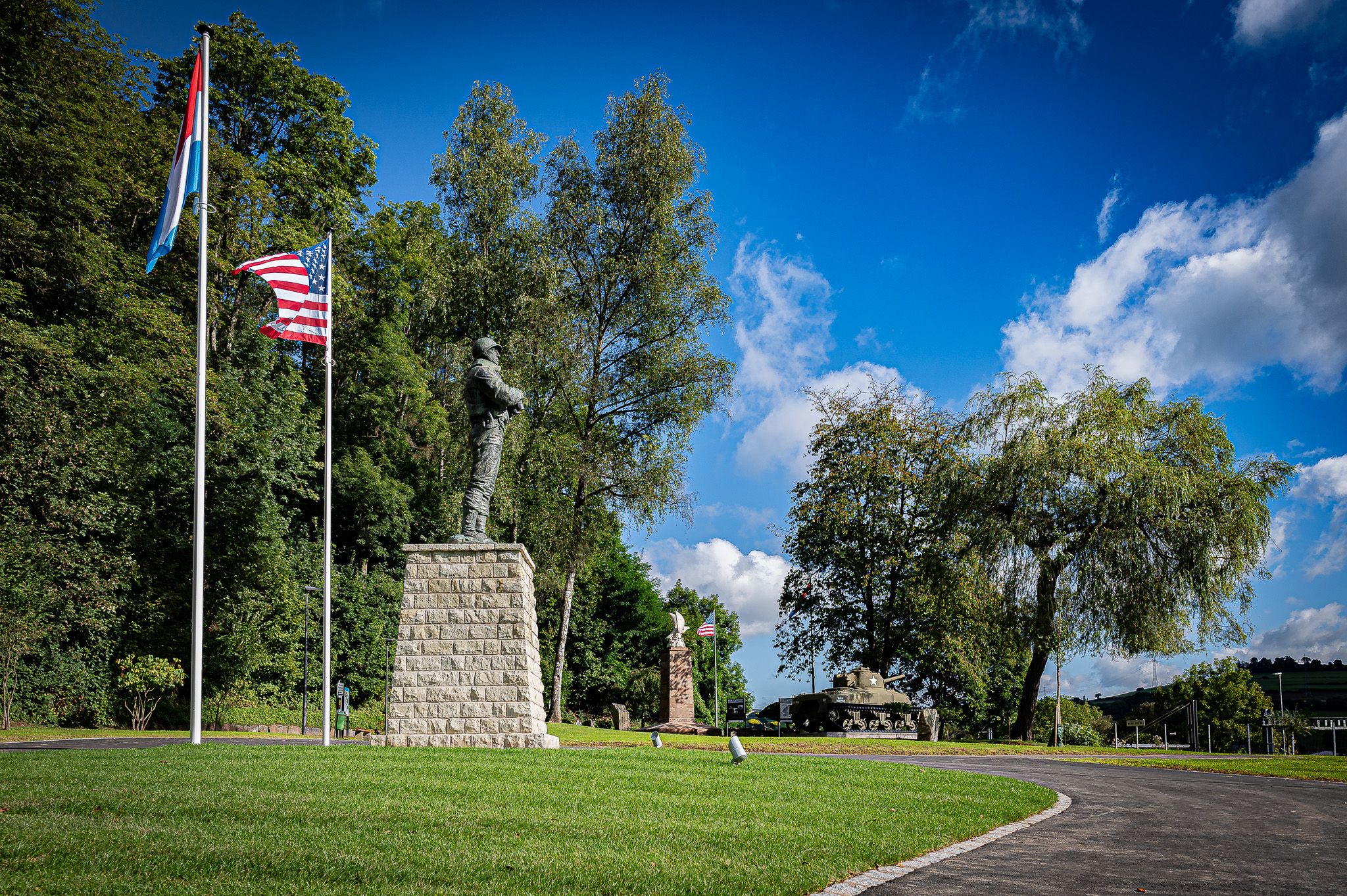
This memorial to General George Patton Jr, commander of the 3rd US Army which liberated Ettelbruck in December 1944, is located at a historical juncture. Here, the American troops succeeded in preventing the invasion of the Wehrmacht into the heartland of Luxembourg during the Battle of the Bulge.

The base of the monument inaugurated in 1954 is engraved with a sword driven into the ground, symbolising the armistice and peace. The emblematic animal of the USA, the bald eagle, is enthroned above it.
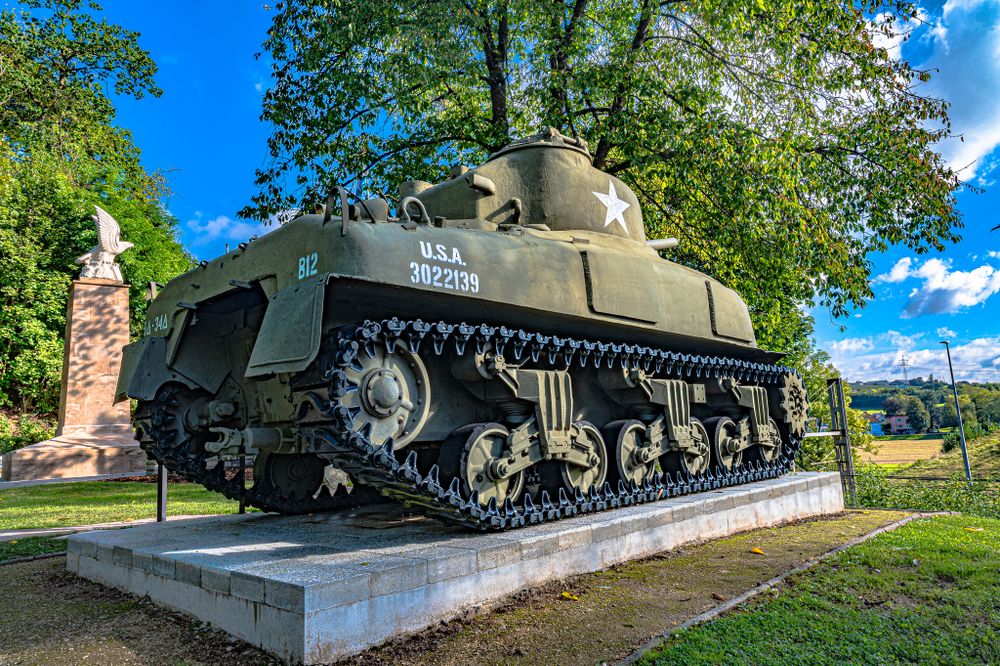
Since 1970, a bronze statue of General Patton and a US battle tank complete the memorial.

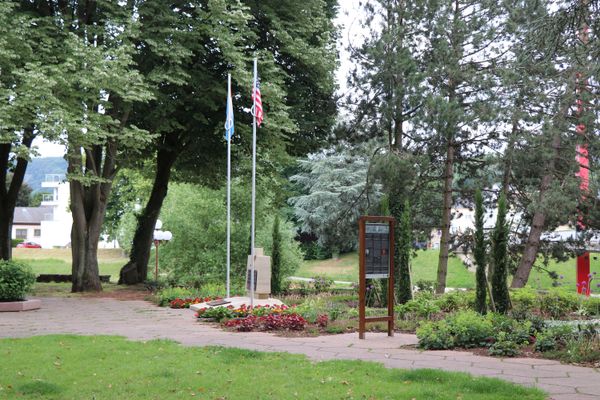
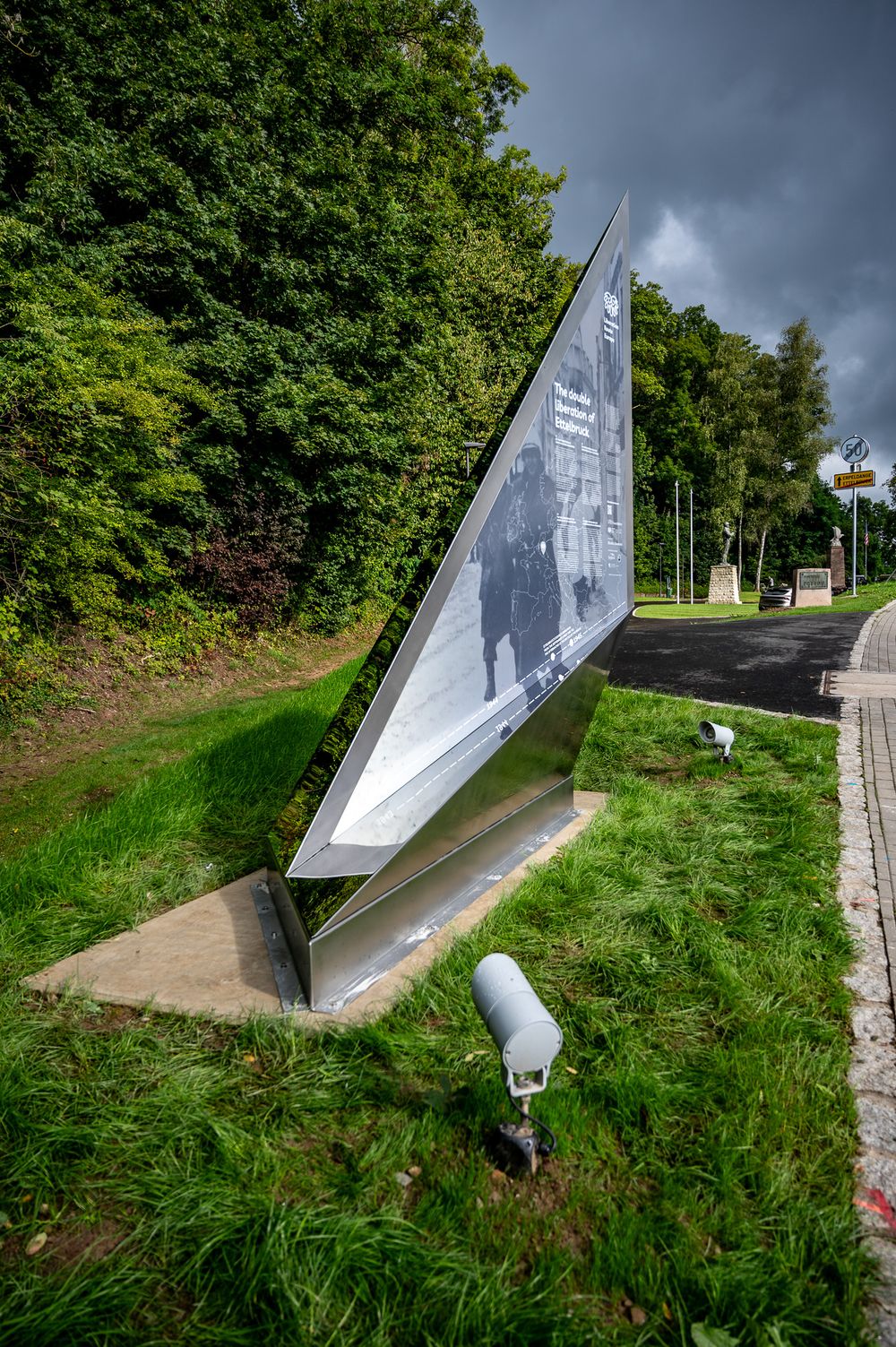
In 2024, Patton Square was completely redesigned. A new monument was added, integrating the itinerary of the ‘Liberation Route Europe’, and reminding visitors of the history of the various places along the route taken by Allied troops between 1943 and 1945 to liberate Europe from Nazi occupation.

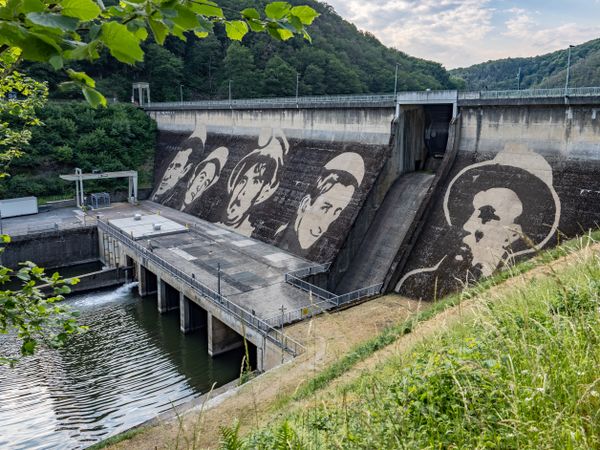
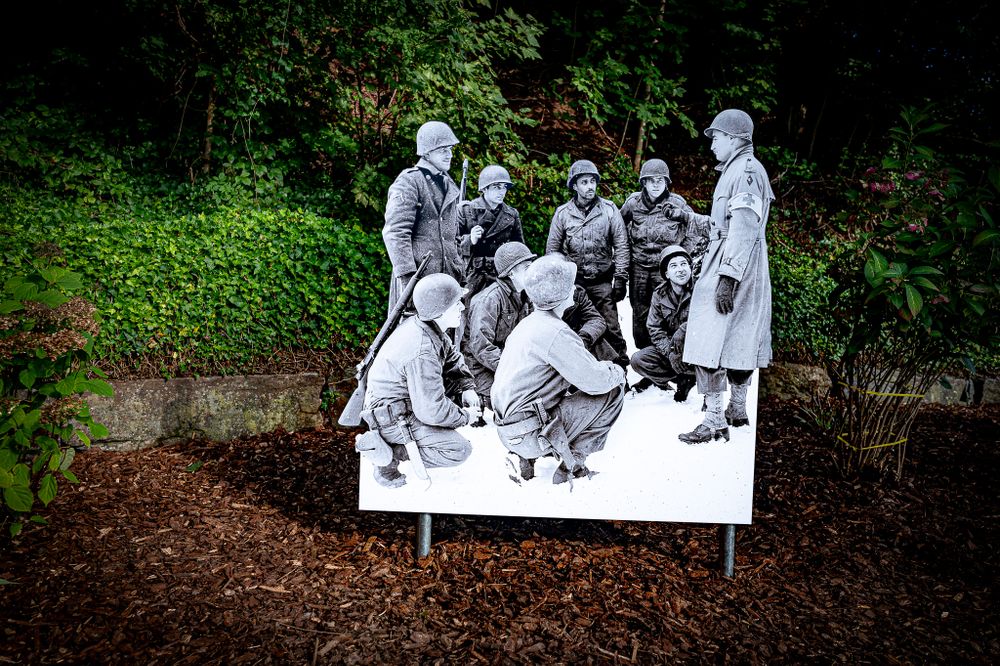
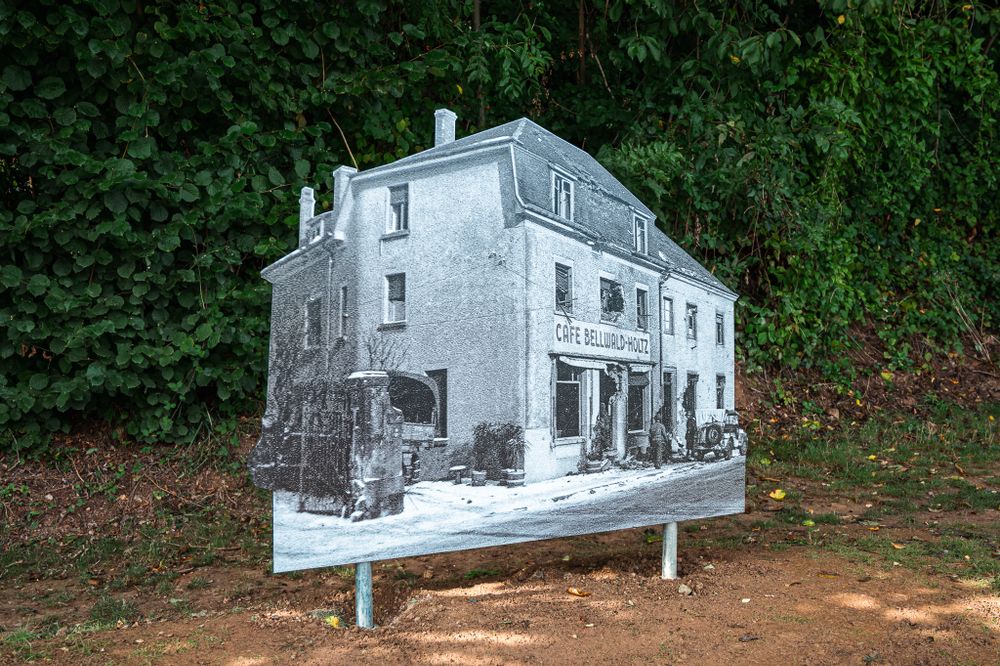
The refurbishment also includes three silhouettes, inspired by historical images and donated by the US Embassy in Luxembourg.


Practical information

  • Outdoor
  • Accessible to all

Culture info

  • History

Opening hours

Contact

Address: General Patton Memorial Museum
5, Rue Dr Klein
L-9054 Ettelbruck
Show on map

More sites

©Caroline Martin
Exhibition “Our Common Heritage”
An ambitious and unifying project, the exhibition “Our Common Heritage” in Boulaide takes an original and completely new approach to the history lived in the cross-border territories of the Greater Region, whose imprint still marks the current geopolitical context.
Find out more
©Commune de Hosingen
Women’s convent in Hosingen
Discover the echoes of time in Hosingen's ancient Augustinian convent, a sanctuary of nobility and learning from its enigmatic origins to poignant its dissolution. Its walls resonate with Luxembourg's rich heritage!
Find out more
©DCK
Former village mill Weiswampach
The village of Weiswampach holds a unique place in Éislek’s history. While most mills in the region were bound by thirlage laws, forcing villagers to use a specific mill and pay fees to the local lord, the Weiswampach mill was a remarkable exception. Though the mill itself no longer stands, its story reveals the complexities of the past and the ways local circumstances could sometimes defy rigid systems.
Find out more
Holy Church Lieler
The Roman Catholic church "Zum Heiligen Kreuz" in Lieler impresses with a Gothic choir tower from the 14th century, accompanied by frescoes from the 16th century.
Find out more
©Naturpark Oewersauer, Naturpark Oewersauer
Circular routes
Schumannseck 1944-1945 Memorial Path
Distance: 3,09 km
Duration: 0:50 h
Difficulty: easy
Find out more
©Samfaitvoyager
Bavigne dam
The Bavigne dam, part of the Upper Sûre reservoir, was built in the 1950s, requiring the relocation of mills and farmsteads. Standing at 23 meters, it guards the lake's pristine water quality. Today, as a popular diving spot, it unveils submerged remnants like bridges and a mill, echoing a rich history amid the progress.
Find out more
©Visit Éislek
Museum of the Battle of the Bulge Wiltz
Discover the moving history of the "martyr town" during the Battle of the Bulge in the interactive museum in Wiltz. Experience history up close in the beautiful Wiltz Castle.
Find out more
Përmeshaff – Estate ruins
Përmeshaff, a historic site near Kaundorf, traces its roots to 1195. Over the centuries, it evolved into a religious centre, attracting pilgrims to its chapel and healing springs. Despite enduring a devastating fire in 1936, recent archaeological efforts have unveiled layers of its rich history, highlighting significance of Përmeshaff as a cultural landmark.
Find out more
Decanal church
The Wiltz Deanery Church has two naves and was built at many periods, repeatedly destroyed, enlarged and altered. A visit provides an insight into the building's turbulent past.
Find out more