The Chapel of St Mark

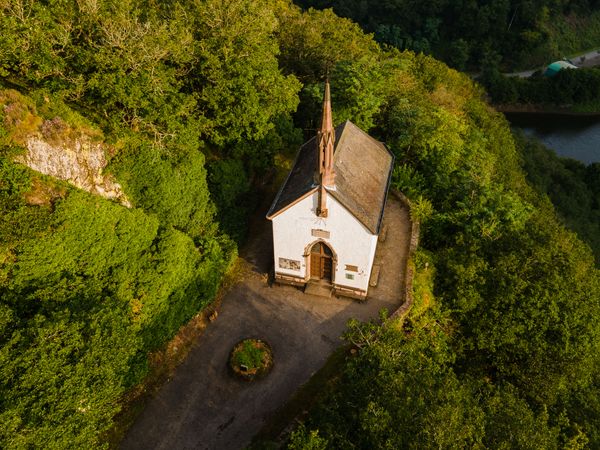
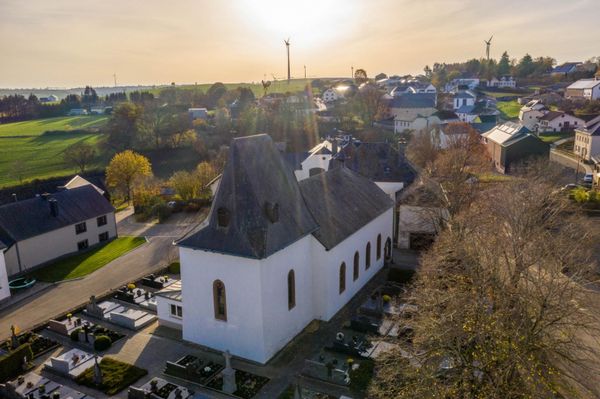
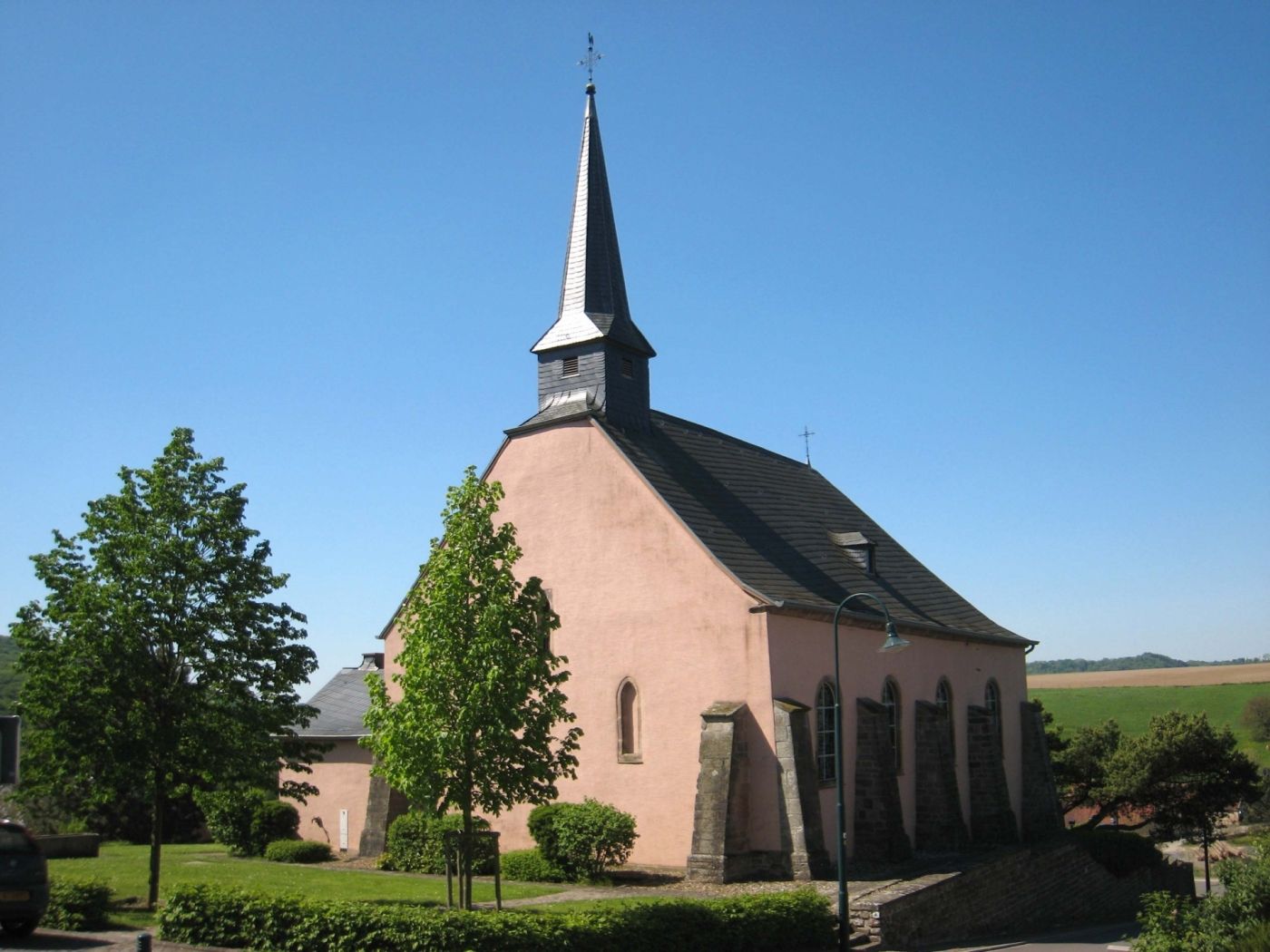
St Mark's Chapel in Longsdorf attracts visitors as a popular place of pilgrimage, especially on 25 April, the feast day of the holy patron saint. The chapel with its two-nave design, geometric paintings and a baroque altar is certainly worth a visit.

The chapel of St Marc is an important pilgrimage site, especially at the occasion of celebration of its holy protector (April 25 th). The precious sanctuary regularly houses classical music concerts. Since 1627 a hermit lived in the neighbouring hermitage. He was in charge of the security of the place. The actual form of the chapel dates back to the 16th century. The sanctuary presents tow naves separated by a colonnade. The choir is divided into three axis. A roofed entrance hall may be distinguished at the western side. 1757 a second entrance was broken into the northern wall.

The geometrical paintings date back to the 16th century. A baroque altar dominates the choir. On the left side the visitor discovers a modern representation of the Virgin, whereas on the right side, he will be impressed by a cross dating back to the early 1600. The cross-stations were realized in the 19th century. The modern art windows had been concieved in 1989 by Emile Probst, an artist born in Vianden and living in Brussels, and who was a member of the lobbying group for abstract art "Iconomaques".

The ancient hermitage hat been transformed into a holiday apartment for 12 guests (T +352 80 71 24).
Opening hours

Contact

Address: The Chapel of St Mark
6, Marxberg
L-9459 Longsdorf
Show on map

More sites

©Visit Éislek
St. Cunegonde Chapel
The St. Cunegonde Chapel in Heiderscheidergrund, a noteworthy example of 19th-century ecclesiastical historicist architecture in Luxembourg, features a neo-Gothic design, late Gothic sculptures, 18th-century statues, and glass paintings, embodying the country's historical and national consciousness as the oldest Kunigundis shrine.
Find out more
©PNDO
Houffelter Kanal - Meuse-Moselle Canal
The Canal That Never Was: The Ambitious Plan to Link Belgium and Luxembourg
Find out more
©Visit Éislek
Church Saints-Côme-et-Damien
The parish church of Sts Côme et Damien in Clervaux, built in 1910/1911 in the Rhenish-Romanesque style, impresses with its striking dome above the altar and its majestic twin towers with melodic chimes.
Find out more
©DCK
Former village mill Weiswampach
The village of Weiswampach holds a unique place in Éislek’s history. While most mills in the region were bound by thirlage laws, forcing villagers to use a specific mill and pay fees to the local lord, the Weiswampach mill was a remarkable exception. Though the mill itself no longer stands, its story reveals the complexities of the past and the ways local circumstances could sometimes defy rigid systems.
Find out more
Tour suggestion
The Battle of the Bulge
Stages: 3
The Battle of the Bulge
Find out more
©Caroline Martin
Exhibition “Our Common Heritage”
An ambitious and unifying project, the exhibition “Our Common Heritage” in Boulaide takes an original and completely new approach to the history lived in the cross-border territories of the Greater Region, whose imprint still marks the current geopolitical context.
Find out more
©Commune de Hosingen
Women’s convent in Hosingen
Discover the echoes of time in Hosingen's ancient Augustinian convent, a sanctuary of nobility and learning from its enigmatic origins to poignant its dissolution. Its walls resonate with Luxembourg's rich heritage!
Find out more
©© Giulio Groebert
Esch-sur-Sûre dam
The impressive dam in Esch-Sauer was built between 1955 and 1958 and blends harmoniously into nature. Its arched design makes it a popular photo spot for photographers and nature enthusiasts.
Find out more
©Visit Éislek
Vianden Dam
The Vianden Dam is currently being transformed into an oversized artwork.
Find out more